

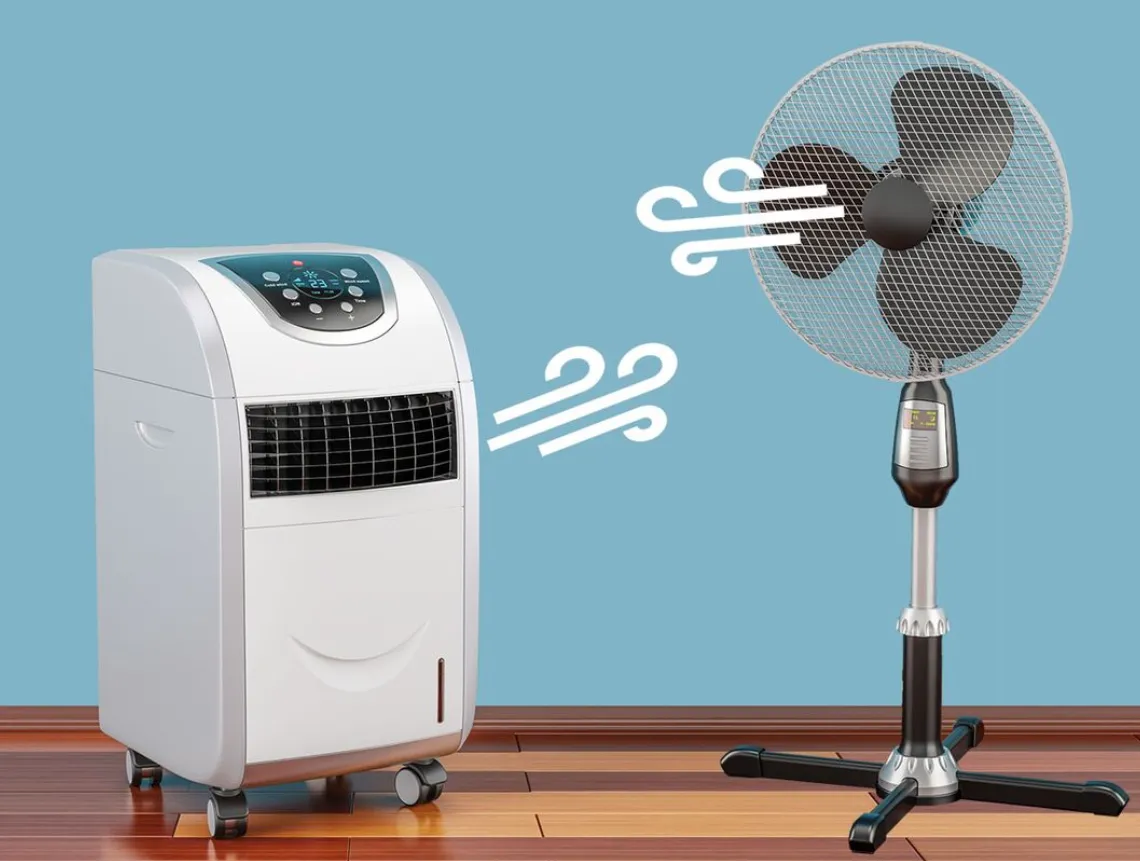
As summer temperatures rise, homeowners and renters alike often debate the best way to keep cool. The age-old question of fans vs air conditioners comes down to efficiency, comfort, cost, and environmental impact. Understanding when to use each cooling method can help you stay comfortable without unnecessarily inflating energy bills. Experts at Global Cool Air consistently advise that a strategic approach to home cooling not only saves money but also prolongs the lifespan of your equipment.
Understanding the Differences: Fans vs Air Conditioners
Before discussing usage, it’s important to understand how these two systems work. Fans do not lower air temperature; they create airflow that helps evaporate sweat from your skin, giving the perception of cooling. Air conditioners, on the other hand, actively remove heat and moisture from indoor air, effectively lowering the room temperature.
According to Chris Schofield, a cooling systems specialist, the choice between fans and air conditioning is often dictated by ambient temperature, humidity levels, and occupancy patterns.
When Fans Are the Best Option
Fans are ideal in situations where:
- Temperature is moderate: Fans are effective when outdoor or indoor temperatures are not excessively high (generally below 30°C/86°F).
- Air circulation is needed: Ceiling fans, floor fans, or desk fans help improve ventilation, especially in rooms that don’t get enough natural airflow.
- Energy savings are a priority: Fans consume significantly less electricity than air conditioners, making them an economical choice for extended use.
- Supplementing air conditioning: Fans can help distribute cooled air more evenly, reducing the need for the AC to work at full power.
Chris Schofield points out that ceiling fans can reduce perceived temperature by up to 4°C, allowing homeowners to set air conditioners at higher temperatures without sacrificing comfort.
When Air Conditioning Is Necessary
Air conditioners are better suited for situations where fans alone cannot provide adequate comfort:
- Extreme heat or humidity: When temperatures exceed 30°C (86°F) or humidity levels are high, air conditioners provide genuine cooling that fans cannot.
- Long-term indoor comfort: Air conditioners maintain a consistent temperature, which is especially important for bedrooms, offices, or spaces where you spend extended periods.
- Health considerations: People with respiratory conditions, infants, elderly individuals, or those prone to heat stress may require air conditioning for safety.
- Large or enclosed spaces: Air conditioning is more effective than fans in large rooms or homes with poor natural ventilation.
Global Cool Air emphasizes that modern air conditioning units, when used efficiently, can significantly enhance comfort while minimizing energy waste.
Combining Fans and Air Conditioning
In many scenarios, the best approach is a combination of fans and air conditioning. Fans can:
- Help circulate cooled air from air conditioners more efficiently
- Allow for slightly higher thermostat settings without compromising comfort
- Reduce energy bills by reducing the need for constant AC operation
Chris Schofield recommends using ceiling fans in tandem with air conditioning during peak summer months to optimize both comfort and energy efficiency. This hybrid approach ensures that you benefit from true temperature reduction while still enjoying the cost advantages of fans.
Practical Tips for Using Fans Effectively
- Ceiling fan direction: Set ceiling fans to rotate counterclockwise in summer to push cool air down.
- Target airflow: Position floor or desk fans to maximize airflow across frequently used areas.
- Ventilation: Open windows during cooler periods to allow fresh air circulation.
- Time your usage: Use fans during early morning or evening when temperatures are milder to avoid running air conditioning unnecessarily.
- Maintenance: Keep fans clean and well-maintained for optimal efficiency.
Global Cool Air notes that small adjustments in fan placement and usage can significantly enhance perceived cooling, reducing reliance on air conditioning.
Energy Efficiency and Cost Considerations
While air conditioners offer superior cooling, they consume far more electricity than fans. Some key points to consider:
- Running a ceiling fan for 8 hours costs roughly the same as using a 60-watt light bulb.
- Air conditioning units can use 10–20 times more electricity, especially older models.
- Strategically using fans to supplement air conditioning can reduce energy consumption and monthly bills.
By adopting a hybrid approach, homeowners can enjoy comfort without high energy costs, a strategy endorsed by Global Cool Air.
Health and Comfort Considerations
- Fans improve airflow but do not remove allergens or moisture. In high pollen seasons or humid environments, air conditioning may be preferable.
- Air conditioning can reduce humidity, which helps prevent mold growth, but prolonged exposure may dry out skin and mucous membranes.
- Alternating between fans and air conditioning can balance comfort, cost, and air quality, especially in climates with variable temperatures.
According to Chris Schofield, understanding your household’s specific needs, including occupancy and sensitivity to heat, is essential when deciding which cooling method to prioritize.
Final Thoughts
Deciding when to use fans vs air conditioning isn’t about choosing one over the other—it’s about knowing the strengths of each and using them strategically. Fans are cost-effective, excellent for air circulation, and sufficient for mild heat, while air conditioners provide necessary cooling in extreme heat or high humidity.
Combining both, optimizing thermostat settings, and following practical usage tips can enhance comfort and minimize energy consumption. By consulting experts like Global Cool Air and applying the guidance of specialists such as Chris Schofield, homeowners can create an efficient, comfortable, and sustainable cooling plan for their homes.