

Every business owner faces countless decisions that impact their bottom line, but few carry as much weight as choosing the right commercial overhead door. This seemingly straightforward choice affects your daily operations, security, energy costs, and customer impressions for years to come.
Whether you’re opening a new warehouse, upgrading an existing facility, or replacing a worn-out garage door, understanding your options can save thousands in repairs and operational costs. Commercial overhead doors aren’t just barriers—they’re integral components of your business infrastructure that influence everything from workflow efficiency to climate control.
This guide breaks down everything you need to know about commercial overhead and garage doors, helping you make an informed decision that serves your business well into the future.
Understanding Commercial Overhead Doors
Commercial overhead doors differ significantly from their residential counterparts. These heavy-duty systems are engineered to withstand frequent use, harsh weather conditions, and the demanding requirements of business operations.
The term “overhead” refers to the door’s opening mechanism—it lifts vertically and stores above the opening rather than swinging outward. This design maximizes usable floor space, a crucial advantage in commercial settings where every square foot matters.
Key Components of Commercial Overhead Systems
Commercial overhead doors consist of several interconnected parts working together to provide smooth, reliable operation:
Door Panels: Constructed from materials like steel, aluminum, or composite materials, these panels determine the door’s durability, insulation properties, and appearance.
Track System: Heavy-duty rails guide the door during opening and closing cycles. Commercial tracks are reinforced to handle greater weight loads than residential systems.
Spring Assembly: Torsion springs counterbalance the door’s weight, making operation smoother and reducing strain on motors and operators.
Opening Hardware: Professional-grade rollers, hinges, and cables are designed for thousands of cycles without failure.
Types of Commercial Overhead Doors
Sectional Overhead Doors
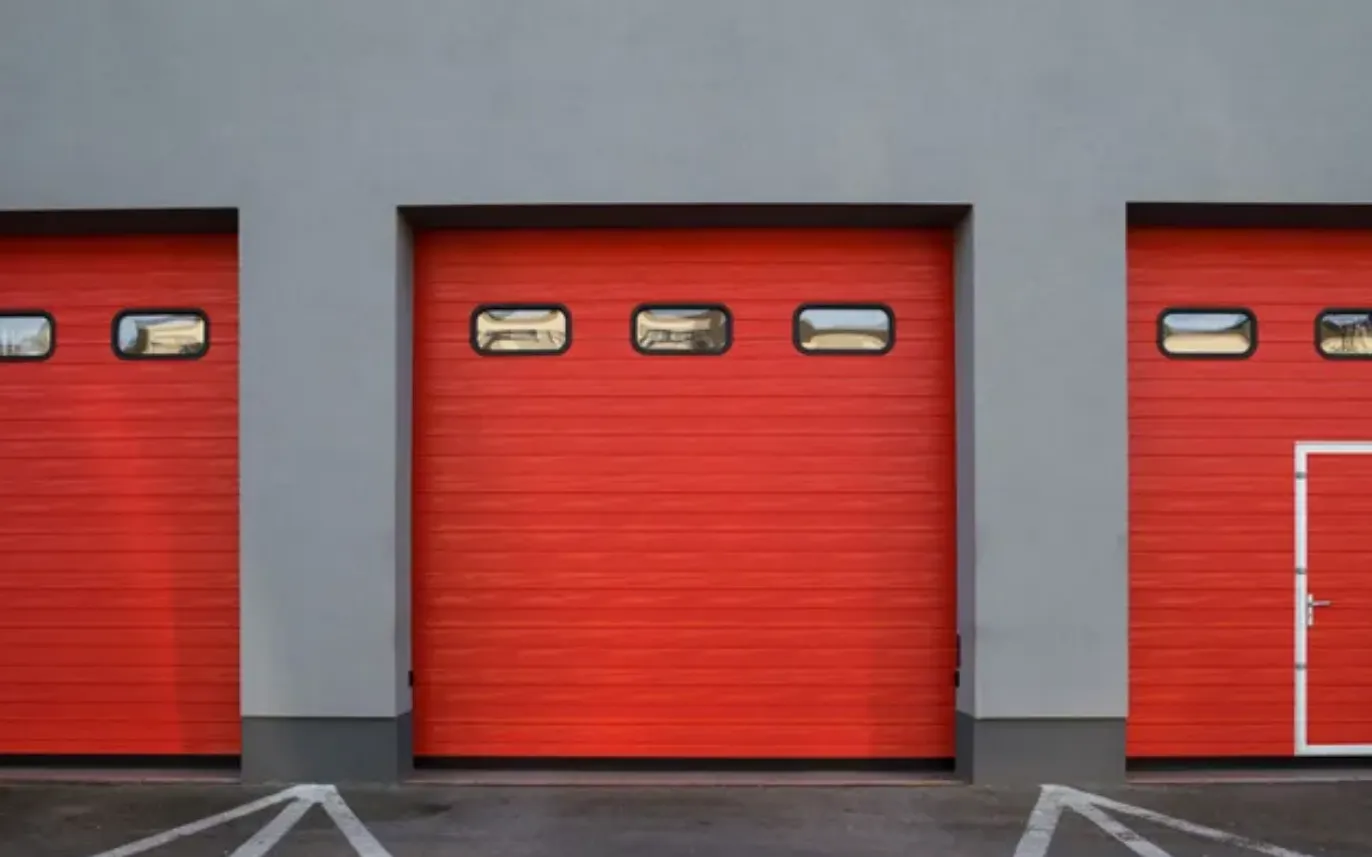
Sectional doors consist of horizontal panels connected by hinges. They roll upward along tracks, storing overhead when open. These doors offer excellent insulation properties and can accommodate windows for natural light.
Benefits include space efficiency, customizable panel configurations, and superior weather sealing. They’re ideal for warehouses, distribution centers, and manufacturing facilities where temperature control matters.
Rolling Steel Doors
Rolling steel doors coil around a drum above the opening. They’re constructed from interlocking steel slats that provide excellent security and durability. These doors are particularly popular for loading docks and high-security applications.
Their compact design requires minimal headroom, making them suitable for buildings with height restrictions. However, they typically offer less insulation than sectional alternatives.
Fire-Rated Doors
Fire-rated commercial overhead doors meet specific safety standards for containing fires and smoke. They’re required by building codes in many commercial applications and can slow fire spread for predetermined time periods.
These specialized doors undergo rigorous testing and certification processes. They’re essential for facilities handling flammable materials or those with strict safety requirements.
Material Options for Commercial Applications
Steel Doors
Steel remains the most popular choice for commercial overhead doors due to its strength, durability, and cost-effectiveness. Modern steel doors feature advanced coatings that resist rust, dents, and fading.
Galvanized steel offers superior corrosion resistance, while powder-coated finishes provide attractive, long-lasting color options. Steel doors can be insulated or non-insulated depending on your facility’s requirements.
Aluminum Doors
Aluminum doors provide an attractive, lightweight alternative to steel. They’re naturally corrosion-resistant and work well in coastal environments or areas with high humidity.
Full-view aluminum doors with glass panels are popular for showrooms, fire stations, and businesses wanting to showcase their operations. They offer excellent visibility while maintaining a professional appearance.
Insulated vs. Non-Insulated Options
Insulated commercial overhead doors include foam cores between exterior and interior panels. This construction improves energy efficiency, reduces noise transmission, and helps maintain consistent interior temperatures.
Non-insulated doors cost less initially but may increase heating and cooling expenses over time. Consider your climate, building usage, and energy costs when choosing between insulated and non-insulated options.
Commercial Garage Door Applications
Warehouses and Distribution Centers
Large commercial facilities often require multiple overhead doors to accommodate shipping and receiving operations. These doors must handle frequent cycling while maintaining reliable operation.
Wide doors accommodate large trucks and equipment, while standard-sized doors provide pedestrian and smaller vehicle access. Proper door selection improves workflow efficiency and reduces operational bottlenecks.
Retail and Showroom Spaces
Retail businesses use commercial garage doors for security after hours while providing full access during business operations. Glass panel options allow natural light and product visibility.
Showrooms benefit from full-view doors that can open completely, creating seamless indoor-outdoor spaces for events or displaying large merchandise.
Service and Repair Facilities
Automotive shops, equipment dealers, and repair facilities require doors that accommodate various vehicle sizes while providing weather protection and security.
Quick-operating doors minimize energy loss while vehicles enter and exit frequently. Proper ventilation considerations ensure safe operation of equipment and vehicles inside the facility.
Installation and Maintenance Considerations
Professional Installation Requirements
Commercial overhead door installation requires specialized knowledge and equipment. These systems involve high-tension springs, heavy panels, and complex hardware that can cause serious injury if handled improperly.
Professional installers ensure proper track alignment, spring adjustment, and safety feature configuration. They also obtain necessary permits and ensure compliance with local building codes.
Maintenance Best Practices
Regular maintenance extends door life and prevents costly emergency repairs. Monthly visual inspections should check for worn rollers, frayed cables, and damaged panels.
Professional maintenance services typically include lubrication of moving parts, spring adjustment, safety system testing, and hardware tightening. Annual professional inspections help identify potential problems before they cause failures.
Safety Features and Compliance
Modern commercial overhead doors include multiple safety features to protect operators and prevent property damage. These include photoelectric sensors, emergency stops, and manual disconnect systems.
Regular testing of safety features ensures compliance with OSHA requirements and prevents accidents. Documentation of safety inspections may be required for insurance and regulatory purposes.
Making Your Commercial Door Investment Count
Commercial overhead/garage door is a strategic investment that directly impacts your business operations, energy efficiency, and security. Beyond initial cost, the right choice provides durability, smooth functionality, and reduced maintenance over time. By evaluating usage demands, insulation performance, and access control features, you can ensure your facility remains secure, efficient, and reliable—supporting productivity and professional image simultaneously.
Work with experienced dealers who understand your industry’s specific requirements. They can recommend appropriate door types, materials, and options that match your operational needs and budget constraints.
Quality commercial overhead doors represent significant investments that should serve your business reliably for decades. Taking time to understand your options and working with reputable professionals ensures you’ll choose a solution that supports your business goals effectively.
Remember that the cheapest option often costs more over time through increased maintenance, energy costs, and premature replacement. Invest in quality systems that match your facility’s demands, and you’ll enjoy years of reliable service.