

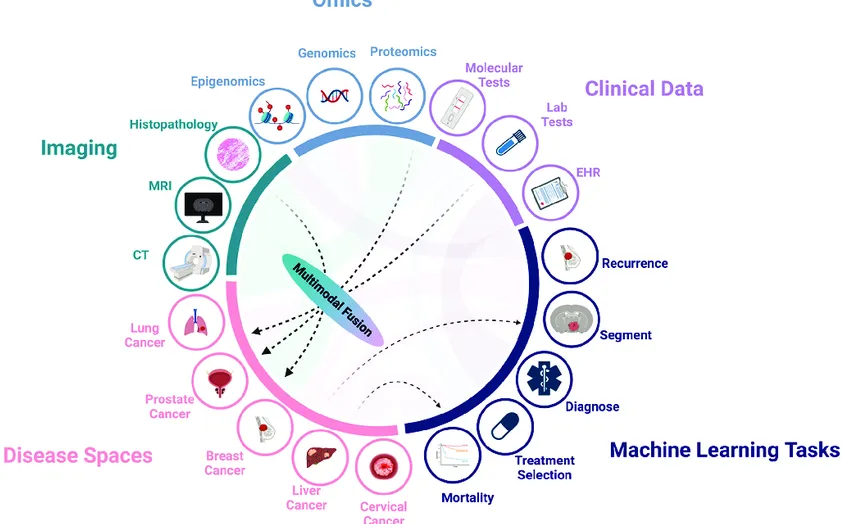
The introduction of healthcare generative AI has shifted the healthcare industry drastically. The technology does not stop at just one kind of data but rather integrates several modalities, like text, medical images, genomics, and patient records, in a superlative manner. Healthcare generative AI, by linking these various information sources, is making great strides in clinical decision-making, personalized medicine, and patient care that were never even thought of before.
Transforming Clinical Decision Support
One cool thing about healthcare gene
rative ai is how it helps doctors make better calls. Usually, they’re stuck looking at different sets of info separately, like lab work, scans, or past records, which doesn’t give them the full story. But AI can pull all that stuff together and give doctors solid ideas for what’s wrong or how to treat someone. By checking out X-rays, reports, and even a person’s genes all at once, AI can give doctors a way better picture, so they’re more likely to get it right and less likely to mess up.
Plus, this AI can guess what might happen based on a patient’s unique info. This is really helpful when things get tricky and there are a lot of things to think about when deciding on treatment. Doctors can use these AI guesses to see possible problems ahead of time and make sure patients get the best care possible right then and there. This not only makes things run smoother but also helps people get better faster.
Revolutionizing Medical Imaging
Medical imaging? Loads of data, tricky to read. But now, healthcare AI is mixing imaging data with other info, totally changing how doctors see and use visual stuff. AI can make images clearer, spot tiny problems doctors might miss, and even guess how a disease will spread by comparing images with genes and health info.
Take cancer, for example. If you mix MRI or CT scans with gene info, AI can guess how a tumor will act and how well treatment will work. This helps cancer doctors make treatment plans that fit each person, instead of using the same plan for everyone. Besides helping with diagnoses, healthcare AI can also create fake medical images to help train new doctors faster, so they don’t have to rely so much on hard-to-find data.
Advancing Genomics and Personalized Medicine
Genomic data is super important for precision medicine, and healthcare generative ai is a game-changer here. By checking out huge amounts of genomic data along with medical records, images, and what patients say, AI can spot tricky patterns and figure out possible ways to treat stuff. The generative part lets it guess how genetic changes might mess with how a disease goes or how someone reacts to drugs, giving doctors useful info that was hard to get before.
This is especially cool for dealing with rare diseases, where there’s not much patient data to work with, so normal ways of checking things out can be tough. AI that uses many types of info can guess things from small bits of data by adding in related info from other patients. This not only makes research faster but also makes sure treatment plans are based on a complete picture of a patient’s genes and health.
Enhancing Patient Experience and Healthcare Delivery
Besides helping with finding what’s wrong and how to fix it, healthcare AI can make being a patient better and healthcare run smoother. AI can look at your records, test results, scans, and data from devices you wear. Then, it can give you health tips that are just for you, keep an eye on long-term problems, and tell you and your doctors about issues fast. Taking this approach helps keep you from getting sick, which means fewer trips to the hospital and lower costs.
Also, AI can make talks between you and your doctor better. It can sum up long medical records and other info so your doctor can lay out what’s wrong and how to handle it so you get it. This way, you can get involved in taking care of yourself. Being able to turn tough data into simple stuff you can use builds trust between you and your healthcare people.
Conclusion
Using AI that looks at lots of different info – text, images, genes, patient history – could really change healthcare. It could help doctors make better calls, turn medical images into something totally new, make treatments just right for each person, and generally make things better for patients. As this tech gets better, it’ll be able to pull useful ideas from all sorts of places. This may build a future where healthcare is super accurate, quick, and all about the patient.